


There’s a moment that comes for every entrepreneur.
You’re working 12-hour days. Answering emails at midnight. Skipping family dinners because “the business needs you.” Telling yourself that this is just what it takes—that success requires sacrifice, grinding harder, hustling longer.
Then one day you look up and realize: you’ve built yourself a prison.
You’re not running a business. The business is running you. And worst of all? You can’t scale it because everything depends on you being there, doing the work, keeping all the plates spinning.
Sound familiar?
Here’s the truth that nobody wants to hear: the hustle culture you’ve been sold is a lie. Not because hard work doesn’t matter—it absolutely does—but because working harder is not the same as working smarter. And the entrepreneurs who are actually winning in 2026 have figured out something crucial:
They’re not hustling more. They’re building systems.
SECTION 1: The Hustle Trap (And Why We All Fall Into It)
Subheading: How “Just Work Harder” Became the Worst Business Advice Ever
Let’s be honest about where this starts.
When you first launch a business, hustle is necessary. You’re the CEO, the accountant, the marketer, the customer service rep, the janitor. You wear all the hats because you have to. There’s no other choice.
And when that initial hard work pays off—when you land your first clients, make your first sales, see your first profits—it feels amazing. It feels like validation. It feels like proof that the formula works:
More effort = More results
So you keep going. You hustle harder. You add more hours. You sacrifice more weekends. And for a while, it continues to work. Revenue grows. The business expands.
But then something strange happens.
The Invisible Ceiling
You hit a plateau. No matter how much harder you work, revenue stays stuck. You can’t take on more clients because you don’t have the time. You can’t launch that new service because you’re already maxed out. You can’t take a vacation because the business might fall apart without you.
You’ve reached what I call The Hustle Ceiling—the point where personal effort can no longer drive business growth.
And this is where most small business owners get trapped. They look at successful larger businesses and think, “I just need to hire people.” But here’s the problem: you can’t scale chaos. If your business only works because you personally touch everything, hiring more people just means managing more chaos.
The Real Problem Isn’t Capacity—It’s Structure
Think about it this way:
- A car factory doesn’t produce more cars by having workers run faster
- A restaurant doesn’t serve more customers by having the chef cook harder
- A airline doesn’t fly more routes by having pilots work longer hours
They all scale the same way: through systems.
Systems that are repeatable, predictable, and teachable. Systems that work whether or not the founder is in the building. Systems that get better over time instead of breaking down under pressure.
That’s what the smart entrepreneurs are building right now. Not bigger to-do lists. Better systems.

SECTION 2: What Business Systems Actually Look Like (Without the Jargon)
Subheading: You Probably Already Use Systems—You Just Don’t Realize It
When people hear “business systems,” they often imagine complicated software, expensive consultants, or corporate bureaucracy. They think, “That’s not for small businesses like mine.”
But here’s the thing: a system is just a way of doing something consistently that produces a predictable result.
You already have systems in your life. You just call them routines or habits.
Systems You Already Use:
- Your morning routine (wake up → shower → breakfast → commute) is a system
- Following a recipe to cook is using a system
- Your route to work that you take every day is a system
- How you organize your grocery shopping is a system
These work because they’re documented (even if just in your head), repeatable (you do them the same way each time), and effective (they achieve the result you want).
Business systems are the exact same thing. The difference is you’re documenting them so that:
- You can do them more efficiently
- Someone else could do them if needed
- Technology can assist or automate parts of them
The Five Systems Every Business Needs
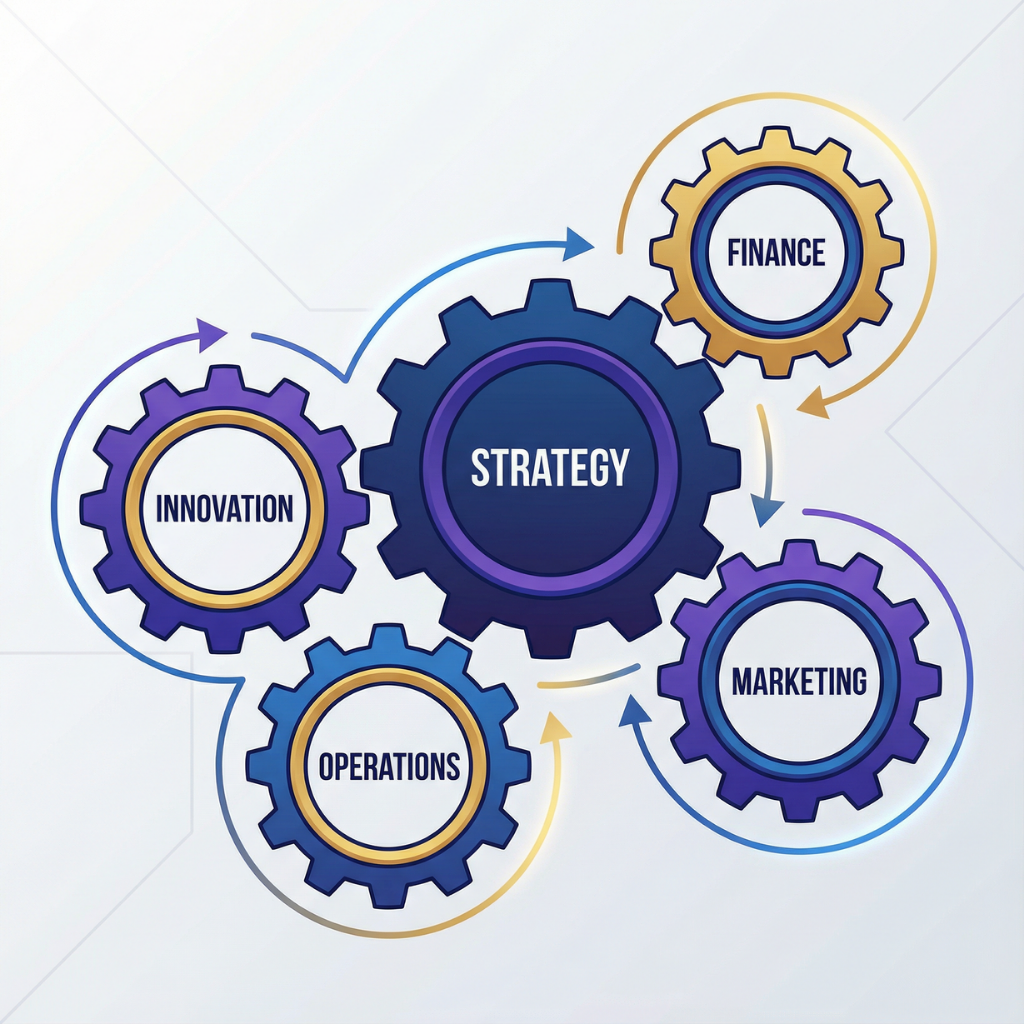
Regardless of what you sell or who you serve, every business has five core system categories:
1. Lead Generation System How do potential customers discover you?
- Traditional approach: Post randomly on social media and hope
- Systematic approach: Content calendar + SEO strategy + email capture + follow-up sequence
2. Sales/Conversion System How do interested people become paying customers?
- Traditional approach: Each person gets a different pitch, different process
- Systematic approach: Standardized inquiry response → consultation flow → proposal template → payment process
3. Service Delivery System How do you actually fulfill what you sold?
- Traditional approach: Figure it out fresh each time, reinvent the wheel
- Systematic approach: Documented process, templates, checklists, quality standards
4. Customer Management System How do you keep customers happy and coming back?
- Traditional approach: Remember everything in your head, reactive problem-solving
- Systematic approach: Automated check-ins, feedback loops, loyalty programs, CRM tracking
5. Business Operations System How does the behind-the-scenes stuff happen?
- Traditional approach: Remember to invoice, chase payments, update records manually
- Systematic approach: Automated invoicing, payment reminders, financial tracking, reporting
Notice what’s different? In the systematic approach, you design how things should work once, then you repeat that process. In the traditional approach, you’re reinventing the wheel every single time.
SECTION 3: The Three Levels of Business Systems (And Where You Should Start)
Subheading: From Manual to Magical—The Evolution of Your Business
Not all systems are created equal. As your business grows, your systems should evolve through three distinct levels:
LEVEL 1: Documentation (The Foundation)
This is where every systematic business begins: writing down how you do things.
It sounds almost too simple, but here’s why it’s powerful:
- You can’t improve what you haven’t defined
- You can’t delegate what you haven’t documented
- You can’t automate what you don’t understand
Example: Customer Onboarding
Traditional way (all in your head):
- Customer pays
- You… do something different each time
- Hopefully remember to send welcome info
- Maybe set up their account
- Possibly follow up
Documented system:
- Payment received → trigger confirmation email (template)
- Add customer to CRM with tag “New Client”
- Send Welcome Package (checklist of what it includes)
- Schedule onboarding call within 48 hours (calendar link)
- Follow-up email 24 hours before call (template)
- Post-call action items (template)
Same process. But now it’s repeatable, delegable, and you’ll never miss a step.
LEVEL 2: Delegation (The Multiplication)
Once you’ve documented a system, you can teach it to someone else—virtual assistant, team member, contractor, or even a family member helping out.
This is where your time starts to multiply. Instead of you doing everything, you’re managing systems that other people execute.
The key question at this level: “Could someone else do this 80% as well as me if they followed my documented system?”
If yes, it’s ready to delegate. If no, your documentation needs work.
Example: Content Creation
Level 1 (You do everything):
- You brainstorm topics
- You write the post
- You create graphics
- You schedule publishing
- You respond to comments
Level 2 (Delegation):
- You brainstorm topics (1 hour/week)
- VA writes first draft using your templates and voice guide (delegated)
- Graphic designer creates visuals using brand templates (delegated)
- VA schedules across platforms (delegated)
- VA handles basic comments, flags complex ones for you (delegated)
Your involvement: 2-3 hours instead of 10-12 hours.
LEVEL 3: Automation (The Amplification)
This is where technology takes over the repeatable parts of your systems, leaving you to focus only on the high-value activities that truly need your expertise.

Example: Email Marketing
Level 1 (Manual):
- Manually send each email
- Remember who you sent what
- Hope you don’t send duplicates
Level 2 (Delegated):
- VA manages email list
- VA sends weekly emails
- VA tracks who opened what
Level 3 (Automated):
- New subscriber joins → automatically receives Welcome Sequence
- They click link A → automatically tagged as interested in Product A → receives Product A nurture emails
- They don’t open for 30 days → automatically moved to re-engagement campaign
- They purchase → automatically moved to customer onboarding sequence → tagged as “Customer”
Your involvement: Set it up once, review performance monthly, optimize quarterly.
The Beautiful Part: These levels build on each other. You can’t automate effectively without documentation. You can’t delegate confidently without documentation. But once you have all three working together?
That’s when your business becomes a true asset—something that creates value whether you’re working in it that day or not.
SECTION 4: The Real ROI of Systems (It’s Not Just Time Saved)
Subheading: Why Systematic Businesses Are Worth 3-5X More
Most entrepreneurs think about systems purely in terms of time savings: “If I automate this, I’ll save 5 hours per week.”
That’s true. But it’s only the beginning.
The Seven Hidden Returns of Systematic Business
1. Consistency = Trust When your systems ensure every customer gets the same high-quality experience, your reputation becomes predictable. Predictable reputation builds trust. Trust drives referrals and repeat business.
2. Scalability = Growth You can’t scale manual processes. But you can scale systems. This means revenue can grow without proportionally increasing stress or work hours.
3. Delegation = Freedom Documented systems make it possible to hire help without becoming a full-time manager. Your systems manage the work; you manage the outcomes.
4. Optimization = Efficiency When you document a process, you can measure it. When you measure it, you can improve it. Manual processes stay the same (or get worse). Systematic processes get better over time.
5. Reduced Error Rate = Higher Profit Margins Checklists and automated processes make fewer mistakes than humans trying to remember everything. Fewer errors mean fewer refunds, fewer do-overs, happier customers.
6. Business Value = Exit Strategy If you ever want to sell your business or bring in partners, buyers don’t want to buy your time—they want to buy your systems. A systematic business is worth 3-5X more than a personality-dependent one.
7. Mental Space = Strategic Thinking When you’re not drowning in daily operations, your brain has room to think strategically. This is where breakthrough ideas come from—not when you’re stressed about remembering to follow up with a client.
Case in Point: Two Businesses, Same Revenue, Different Value
Business A: “The Hustle”
- ₦10 million annual revenue
- Owner works 60 hours/week
- Everything depends on the owner being present
- No documented processes
- Inconsistent customer experience
- Worth: 1-2X annual profit (if someone wants to buy your job)
Business B: “The System”
- ₦10 million annual revenue
- Owner works 30 hours/week (mostly strategic)
- Clear systems document how everything works
- Team executes documented processes
- Consistent, high-quality customer experience
- Worth: 3-5X annual profit (someone’s buying a business, not a job)
Same revenue. Drastically different value. The difference? Systems.

SECTION 5: Your First System to Build This Week
Subheading: The 90-Minute Exercise That Changes Everything
I know what you’re thinking: “This all sounds great, Najite, but I don’t have time to document my entire business!”
You’re right. And you don’t need to.
The 80/20 Rule of Business Systems:
In most businesses, 20% of your processes consume 80% of your time. If you systematize that crucial 20%, you’ll immediately reclaim the majority of your time and mental energy.
So let’s start there. Here’s your assignment for this week:
Step 1: The Time Audit (30 minutes)
For the next 2-3 days, keep a simple log of how you spend your time. Just note:
- What task you’re doing
- How long it takes
- How many times you do it per week
Don’t overthink it. Just track.
Step 2: Identify Your Biggest Time Drain (10 minutes)
Look at your log and ask:
- What task do I do most frequently?
- What task takes the longest total time per week?
- What task frustrates me most?
Pick ONE. That’s your starting point.
Step 3: Document the Process (30 minutes)
Open a Google Doc and write down, step-by-step, how you currently do this task. Use this format:
Task Name: [e.g., “Client Onboarding”]
Trigger: What starts this process? [e.g., “Client pays invoice”]
Steps:
- [Action + Time estimate] (e.g., “Send welcome email – 5 min”)
- [Action + Time estimate]
- [Continue…]
End Result: What does completion look like?
Tools/Templates Needed: List any files, links, or resources
Current Pain Points: What goes wrong or takes too long?
Step 4: Identify Improvement Opportunities (20 minutes)
Look at your documented process and ask:
- Which steps could use a template? (Create simple templates)
- Which steps could be automated? (Research one tool that could help)
- Which steps could be delegated? (Note if you had help, what would you hand off first?)
You don’t have to implement everything today. Just document and identify. That alone will transform how you see your business.
Bonus: Share Your System
If you have a team member or VA, share this documented process. Ask: “Does this make sense? What questions do you have?” Their questions will show you what needs more clarity.
If you work alone, revisit this document in a week and see if you can follow your own instructions. If yes, it’s a good system. If you’re confused by your own notes, add more detail.
SECTION 6: Common Mistakes When Building Systems (And How to Avoid Them)
Subheading: Don’t Let Perfect Be the Enemy of Done
As you start systemizing your business, watch out for these common traps:
Mistake #1: Trying to Systematize Everything at Once
The Problem: You get overwhelmed, make no real progress, give up.
The Solution: One system per month. That’s 12 documented, improved systems by this time next year. That will transform your business.
Mistake #2: Over-Complicating the System
The Problem: You create a 47-step process with multiple software tools and decision trees. Nobody (including you) follows it.
The Solution: Simpler is better. If your system is too complex to remember, it’s too complex to be useful. Start basic, refine as you go.
Mistake #3: Documenting But Not Implementing
The Problem: You have beautiful Google Docs full of processes nobody actually uses.
The Solution: Every documented system needs an implementation date and a review date. Set a calendar reminder: “Start using [System Name]” and another two weeks later: “Review how [System Name] is working.”
Mistake #4: Not Updating as You Evolve
The Problem: Your systems become outdated as your business changes, making them useless.
The Solution: Quarterly system review. Every 3 months, revisit your core systems. What’s changed? What’s no longer relevant? What needs adjustment?
Mistake #5: Forgetting That Systems Serve People
The Problem: You become so rigid about “the system” that you lose flexibility and customer service suffers.
The Solution: Systems should make it easier to serve people well, not harder. If a system creates bad customer experiences, change the system—don’t blame the customer.
SECTION 7: What Life Looks Like on the Other Side
Subheading: From Chaos to Calm—The Systematic Business Experience
Let me paint you a picture of what becomes possible when you run a systematic business:
Monday Morning
You wake up naturally—no alarm screaming at you because you worked until midnight Sunday.
Over coffee, you check your phone. Your automated systems have been working while you slept:
- Three new leads came through your website and received your welcome sequence
- Two existing clients submitted project briefs through your intake form
- Your social media scheduler posted your morning content
- A payment reminder went out automatically and two invoices were paid overnight
Your VA (virtual assistant) is already working from their timezone, handling customer inquiries using your documented response templates. They’ll flag anything complex for your afternoon review.
10 AM: Strategic Work Time
Instead of putting out fires, you spend two hours on what actually grows your business:
- Reviewing last week’s performance metrics (automatically compiled in your dashboard)
- Planning next month’s content themes
- Recording a training video for your team on a new service offering
12 PM: Client Delivery
You have a client session. But instead of scrambling to remember what they need, your CRM pulled up their entire history automatically. You have templates for common deliverables. The quality is consistent and high.
2 PM: Automation Review
You check your automation workflows. One seems to have lower conversion rates than usual. You make a small tweak to the email subject line. Done.
4 PM: Team Check-In
15-minute call with your VA. They’ve completed 25 tasks today using your documented systems. They have two questions about edge cases not covered in your processes. You update the documentation. Tomorrow they won’t need to ask.
5 PM: Done for the Day
You close your laptop. Actually close it. Because you know:
- Urgent customer inquiries are being handled by your system
- Tomorrow’s work is queued and ready
- Nothing will fall through the cracks
- The business will be fine while you’re offline
You have dinner with your family. You actually taste the food.
This isn’t fantasy. This is what systematic businesses look like.
SECTION 8: The Transition Timeline (What to Expect)
Subheading: From Chaos to Systems in 90 Days
Building a systematic business doesn’t happen overnight. But it also doesn’t take years. Here’s a realistic timeline:
Month 1: Foundation
- Week 1: Time audit, identify biggest time drain
- Week 2: Document first system completely
- Week 3: Implement or automate first system
- Week 4: Review results, identify next system
Expected Impact: 5-10 hours reclaimed per week
Month 2: Expansion
- Week 5-6: Document and implement second system (usually complementary to the first)
- Week 7-8: Introduce delegation—train someone on your first two systems
Expected Impact: 10-15 hours reclaimed per week, first tasks successfully delegated
Month 3: Optimization
- Week 9-10: Document third system
- Week 11: Review all three systems—what’s working, what needs adjustment?
- Week 12: Plan next quarter’s system priorities
Expected Impact: 15-20 hours reclaimed per week, confidence in systematic approach, noticeable reduction in stress
Beyond 90 Days:
By month 4-6, you’re not just surviving anymore—you’re scaling. Your systems are solid enough that you can:
- Take a vacation without the business collapsing
- Bring on clients without panic about capacity
- Pursue new opportunities because you have bandwidth
- Actually enjoy entrepreneurship again
SECTION 9: Your Choice: Hustle Forever or Build Once, Scale Forever
Subheading: The Decision That Determines Your Future
Let’s be direct about what you’re choosing between:
Path A: The Perpetual Hustle
- You work harder every year just to maintain current revenue
- Vacation means checking email every two hours
- Growth means more stress, longer hours, higher blood pressure
- Your business is your prison, not your freedom
- You can never sell or step back because you ARE the business
- Burnout is inevitable; it’s just a matter of when
Path B: The Systematic Scale
- Systems handle routine operations while you focus on growth and strategy
- Vacation means actual disconnection and rest
- Growth means leveraging systems and delegation, not just personal effort
- Your business becomes an asset that creates value independent of your daily input
- You could sell, bring in partners, or step into a CEO role whenever you choose
- Sustainable, enjoyable entrepreneurship for the long term
Here’s the thing: both paths require effort.
Path A requires endless effort with diminishing returns.
Path B requires focused effort upfront with compounding returns.
The entrepreneurs who thrive in 2026 and beyond aren’t the ones who can hustle the longest. They’re the ones who built systems that hustle for them.

CLOSING CALL TO ACTION
Ready to Stop Hustling and Start Systematizing?
The process we’ve covered today—audit, document, implement, refine—is exactly how I’ve helped thousands of entrepreneurs reclaim their time, scale their businesses, and remember why they started this journey in the first place.
But I know that starting can feel overwhelming when you’re already stretched thin.
That’s why I’ve created a free resource that will walk you through your first system step-by-step.
[Download the Free “Business Systems Starter Kit”]
Inside, you’ll get:
- The 30-Minute Time Audit Template (identify your biggest opportunities)
- 5 Essential System Templates (copy-paste and customize for your business)
- The Automation Toolkit (which tools to use for common business processes)
- Video Walkthrough (watch me systematize a real business task in 20 minutes)
This is the same framework that’s helped solo entrepreneurs serve 50+ clients, small business owners reclaim 20+ hours per week, and growing companies scale past 7 figures without hiring massive teams.
[Get Your Free Systems Starter Kit Now]
Plus: Join our weekly newsletter where we break down one business system every week—showing you exactly how to document, delegate, or automate it. Plain language. Real examples. Actionable steps.
Because life is too short to spend it drowning in your own business.
Let’s build systems that set you free.